
Special Session: Emerging Challenges in Modeling, Control, and Protection of Power Electronics-Dominated Power Systems
Modern power systems are undergoing a paradigm shift in their operational characteristics and stability mechanisms, driven by the saturation of power electronic devices. This evolution introduces a new layer of complexity where the distinction between AC and DC subgrid dynamics becomes increasingly porous, leading to highly intertwined interactions. Unlike traditional systems, the new landscape is defined by a strong coupling between converter control strategies and the grid's response to faults. This creates a specific vulnerability: because converter transients and grid faults share similar electromagnetic time scales, differentiating between the two is difficult. Consequently, the field must address these profound difficulties to ensure robust system modeling and reliable protection schemes.
This Special Session aims to address these emerging challenges and foster the exchange of innovative research on the design, modeling, analysis, control, and protection of future power systems with high penetration of power electronics-interfaced generation and loads. We invite contributions that present novel methodologies, case studies, and technological advances to enhance the reliability, resilience, and performance of such systems. Topics of interest include, but are not limited to:
Topics:
* Modeling and simulation of power electronics-dominated power systems
* Fault analysis and characterization in hybrid AC/DC grids
* Advanced fault detection, diagnosis, and location techniques
* Protection schemes for grids with high inverter-based resources
* Transient and dynamic stability analysis with power electronics
* Control strategies for voltage and current in converter-rich systems
* Fault current limiting and suppression technologies
* Stability-enhanced grid-forming and grid-following control
* Application of artificial intelligence in system protection and control
* Standardization, testing, and validation of models and protective devices
* Real-world implementations, field tests, and industrial case studies

Assoc. Prof. Dachuan Yu, Qingdao University of Science & Technology, China
Dachuan Yu, was born in Henan Province, China, in 1992. He received the M.S. degree and the Ph.D. degree in electrical engineering from Shandong University, and Chongqing University, respectively. Currently, he is an associate professor and M.S. Supervisor with Qingdao university of science & technology, Qingdao, China. At present, he is the parter of Shandong Province Youth Innovation Team, the youth assistant editor of ‘Power System Protection and Control’ and ‘Protection and Control of Modern Power Systems’. He has published more than 10 papers as the first/corresponding author in journals such as IEEE Power Del., Prot. Contr. Mod. Power Syst., etc.. He hosts 1 Natural Science Foundation of Shandong Province Projects, 1 Youth Science and Technology Innovation Support Program for Higher Education Institutions of Shandong Province. His research interests include HVDC transmission, travelling wave protection, travelling wave fault location and electronic transformers.
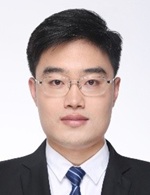
Assoc. Prof. Dong Wang, Qingdao University of Science & Technology, China
Dong Wang, was born in Shandong Province, China, in 1992. He received the B.E. degree and the Ph.D. degree in electrical engineering from Shandong University, Jinan, China, in 2013 and 2018, respectively. Currently, he is an associate professor and M.S. Supervisor with Qingdao university of science & technology, Qingdao, China. At present, he is the leader of Shandong Province Youth Innovation Team, the youth assistant editor of ‘Power System Protection and Control’ and ‘Protection and Control of Modern Power Systems’. He has published more than 20 papers as the first/corresponding author in journals such as IEEE Power Del., Prot. Contr. Mod. Power Syst., etc.. He hosts 1 Natural Science Foundation of China Project, 2 Natural Science Foundation of Shandong Province Projects, 1 Youth Science and Technology Innovation Support Program for Higher Education Institutions of Shandong Province. His research interests include HVDC transmission, travelling wave protection, travelling wave fault location and electronic transformers.
Submit Method:
1, submit it via the link: https://confsys.iconf.org/submission/aceee2027 (after entering the link, click on the corresponding topic)
2, send your manuscript to aceee@vip.163.com with subject "Submit+Special Session-3+Paper Title". (请通过邮件发送稿件,邮件题目:Submit+Special Session-3+Paper Title)