
Special Session: Grid-Forming Technologies and Stable Operation Control of Power-Electronized Power Systems
With the large-scale integration of high-penetration renewables like wind and solar into the grid through power electronic converters, the power system is undergoing a rapid shift—from a traditional synchronous generator‑based regime to a new architecture dominated by power electronic devices. While this transition improves system flexibility and controllability, it also brings serious stability challenges, such as reduced inertia support, risks of wide‑band oscillations, and multi‑timescale coupling. Hence, advancing grid‑forming control technologies, innovating converter topologies and control strategies, and deepening the understanding of stable operation mechanisms in flexible AC/DC transmission and distribution systems have become essential to building a secure, reliable, and efficient new power system.
Topics of interest include, but are not limited to:
Topics:
* Grid Integration and Control Technologies for Renewable Energy
* Topology, Modeling, and Control of Power Electronic Converters
* Grid-Forming Control Strategies and Their Applications
* Modeling, Stability Analysis, and Control of Power-Electronicized Power Systems
* Power Electronics Technologies in Flexible AC/DC Transmission and Distribution
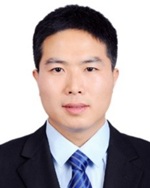
Assoc. Prof. Decun Niu, Qingdao University of Science & Technology
Dr. Decun Niu is an associate professor at Qingdao University of Science and Technology, where he is also recognized as a Fifth-Level Talent Introduction Program honoree. He received his M.S. degree from Shandong University in 2014 and subsequently worked at the State Power Investment Corporation Shandong Electric Power Engineering Consulting Institute until 2018. He then returned to Shandong University, completing his Ph.D. in 2022. Dr. Niu has authored more than 20 academic papers, including six first-author/corresponding-author articles in IEEE Transactions on Industrial Electronics and IEEE Transactions on Power Electronics. He has also filed 10 national invention patents and led two industry-sponsored projects as principal investigator. His research focuses on power electronic converter topologies and control, renewable energy grid integration, and the optimization and management of battery energy storage systems.
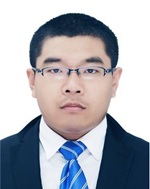
Assoc. Prof. Lei zhang, Institute of Electrical Engineering, Chinese Academy of Sciences, China
Dr. Lei Zhang is an Associate Researcher at the Institute of Electrical Engineering, Chinese Academy of Sciences (IEE-CAS). He received his Ph.D. in Electrical Engineering from Arizona State University, USA, and subsequently served as a Research Fellow at Nanyang Technological University, Singapore. His research focuses on modular multilevel converters (MMCs), energy storage systems, and hybrid AC–DC microgrids. Dr. Zhang has made significant contributions to the development of battery energy storage systems (BESS) and hybrid energy storage systems based on MMC architectures. He has led or participated in multiple major research initiatives, including the BR-B Talent Fund, Key National Science & Technology Specific Project, and the IEE-CAS Talent Fund. To date, he has authored or co-authored 16 papers indexed by SCI and was awarded Best Paper Award at the 8th IEEE Energy Conversion Congress & Exposition (ECCE) Asia. Additionally, he serves as a reviewer for the Chilean National Science Funding Agency.
Submit Method:
1, submit it via the link: https://confsys.iconf.org/submission/aceee2027 (after entering the link, click on the corresponding topic)
2, send your manuscript to aceee@vip.163.com with subject "Submit+Special Session-4+Paper Title". (请通过邮件发送稿件,邮件题目:Submit+Special Session-4+Paper Title)